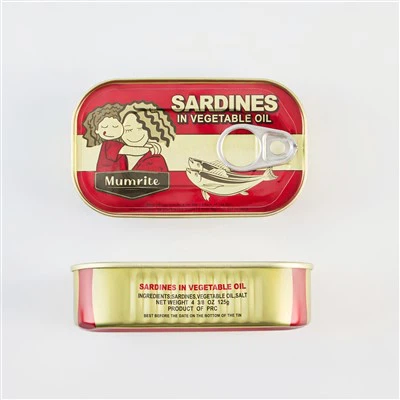
Morocco, once the unrivaled leader in global canned sardine exports with a 28.8% share of the market as recently as 2023, has seen its presence dwindle steadily in recent years. Meanwhile, Chinese manufacturers have rapidly risen to fill the void, becoming the backbone of supply for markets across Africa, Europe, and Latin America. This dramatic shift is not accidental-it stems from a confluence of pressing challenges for Morocco, including resource depletion, operational inefficiencies, and cost pressures, contrasted sharply by China's optimized industrial ecosystem that masterfully balances quality, large-scale production, and competitive pricing to meet global demand.

The core challenge undermining Morocco's canned sardine industry lies in depleting sardine stocks and unsustainable fishing practices. Sardines account for a staggering 70% of Morocco's small pelagic fish catch, forming the lifeblood of its coastal fishing communities and canning factories. However, decades of overfishing, coupled with global warming-driven seawater temperature rises that disrupt sardine spawning cycles, have reduced local populations by 23% over the past decade, according to the Food and Agriculture Organization (FAO). To comply with strict EU sustainability norms-critical for maintaining access to its highest-margin market-Morocco tightened fishing quotas by 15% in 2024, drastically cutting annual catches and creating a chronic shortage of raw materials for canning. This scarcity forces Moroccan factories to redirect nearly all their output to the EU, further shrinking the global availability of their canned products and opening the door for competitors.
Widening cost and efficiency gaps further widen the divide between Moroccan and Chinese producers. Morocco relies heavily on semi-manual processing methods, with many factories still using outdated equipment that requires extensive human labor. In stark contrast, our factory leverages state-of-the-art equipment imported from Germany and Japan, including ultrasonic cleaning systems, computer-controlled cooking lines, and fully automated canning machines with defect detection. This automation boosts our processing efficiency to 95%, slashes labor costs by 30%, and ensures consistent quality across every batch-advantages Morocco cannot match with its current infrastructure.

Morocco's fragile supply chain exacerbates its decline, while China's integrated logistics network strengthens its global reach. A 2024 report by Morocco's Ministry of Fisheries revealed that only 34% of the country's major ports-including key hubs like Casablanca and Tangier-have functional cold chain infrastructure. This deficiency leads to an estimated 120 tons of fresh sardine losses daily, as unrefrigerated catches spoil before processing, and delayed deliveries to international markets. China, by contrast, has built a seamless end-to-end supply chain. We source sardines exclusively from FAO-certified sustainable fisheries in the South and East China Seas, with dedicated fishing fleets ensuring catches reach our factories within 6 hours of being hauled in-preserving maximum freshness.
China's rise is also fueled by unmatched market adaptability, a key advantage in catering to diverse global demands. Unlike Moroccan factories, which are locked into rigid production models to serve the EU. We also hold full certifications including BRC (Grade AA), FDA, HACCP, and ISO 22000, ensuring compliance with every major market's safety standards. This adaptability has made us a top choice in Africa, where China's aquatic exports (including canned sardines) grew by 31.2% in 2025, according to customs data. With stable supply, competitive pricing and uncompromising quality, Chinese canned sardines have seamlessly filled the gap left by Morocco's decline, becoming the preferred choice for businesses worldwide seeking reliability and value.