

Why Choose Us
Production Market
Based on much competitive price, high quality control system, on time shipment and good after-sale service, we have export the products to supermarkets and wholesalers of Europe, Africa, and Southeast Asia.
Professional Team
We have a professional team including R&D, production, sales and service personnel. This team is able to ensure the smooth operation of the company, while continuously promoting its development and innovation.
Our Certificate
We have passed GAP authentication. It is also certified by the authentication of ISO 9001, BRC, HACCP, HALAL etc.
Geographical Advantage
Our factory is close to the seaport, which makes transportation very convenient and cost more competitive.
Canned Sardine refers to canned or tinned sardines, which are sardines preserved in cans. Sardines are a type of small, oily fish that are commonly used in canned fish products. They are a popular choice for meals on the go or as a quick and easy source of protein.

Our Canned Mackerel 155G are highly popular in the Nigerian market, and we are suppliers to many local brands such as De-elo, Ochra, Sarah, Pigeon, and more. We offer a variety of flavors and types of fish canned goods to cater to different consumer preferences. Common flavors include original, spicy, lemon-flavored, and more.

Canned Pilchard In Tomato Sauce
Canned Pilchard in Tomato Sauce is made from fresh pilchard fish and tomato sauce. Pilchard fish is known for its rich flavor and nutritional benefits, while the tomato sauce adds a tangy and savory taste.The combination of pilchard fish and tomato sauce creates a delicious and harmonious taste. The tomato sauce adds a pleasant acidity and sweetness, complementing the natural flavors of the fish.It offers a convenient and ready-to-eat option for seafood lovers.

Our Canned Tuna 185G comes from the vast ocean, harvested at the peak of perfection. Only when the tuna is in its prime health, do we carefully process and pack it into cans. Each bite allows you to savor the freshness of the sea, transporting you to coastal bliss.

Our Canned The 425g packaging size offers a generous quantity of canned mackerel, making it suitable for larger meals or for individuals who consume mackerel regularly. It is convenient to have a larger can on hand when preparing meals for a family or for multiple servings. Our Canned Mackerel 425G are incredibly convenient and easy to store and consume. With no additional cooking required, simply open the can and enjoy the delicious mackerel, making it perfect for the fast-paced modern lifestyle.

Our Canned Mackerel in Oil goods are highly popular in the Ghanaian market, and we are suppliers to many local brands such as Bella, Family, Fampof, Lele, and many other well-known brands. We can provide customers with various types of mackerel canned goods, including options with added spice or other specific requirements.

Easy Open canned sardines feature a user-friendly design that allows for easy and quick opening. No need for can openers or other tools-simply pull the tab and the can lid easily lifts open.The Easy Open design helps maintain the freshness of the product. Once opened, you can enjoy a portion of the sardines and conveniently reseal the can to keep the remaining fish fresh.Sardines are small, oily fish that are commonly found in oceans and seas. They are known for their rich flavor and high nutritional value.

These spicy canned sardine are infused with chili peppers or other spicy seasonings, providing a unique and fiery taste. They cater to consumers who enjoy spicy food and crave a flavorful kick.Sardines are a rich source of protein, healthy fats, vitamins, and minerals. Spicy canned sardine retain these nutritional.

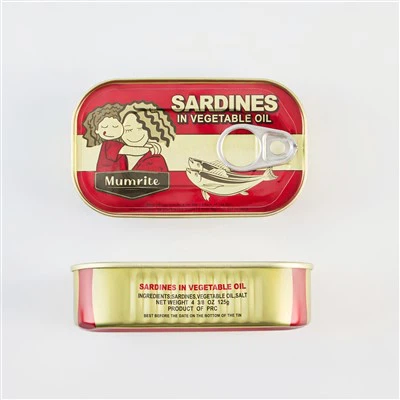
We take pride in offering high-quality Canned Sardine 125G products made in China, available for sale in Ghana. Our Canned Sardine 125G have gained popularity for their taste, quality, and nutritional value. We are committed to providing Ghanaian consumers with high-quality sardine products made in China while ensuring food safety and quality standards. Our team monitors the entire supply chain to ensure you receive reliable products and exceptional service.

Canned Mackerel In Tomato Sauce
Canned Mackerel In Tomato Sauce is typically made from fresh Mackerel. Fresh Mackerel is carefully selected and processed to ensure only high-quality fish is used for canning.Canned Mackerel In Tomato Sauce has excellent shelf life and can be stored for an extended period while retaining its freshness and texture. The sealed cans prevent air and bacteria from entering, thereby extending the product's shelf life.
May offer heart-health benefits
Cardiovascular disease is the leading cause of death for adults in the United States, making efforts to reduce the prevalence of this condition extremely important. A recent review released in the April 2023 journal of Frontiers in Nutrition found that the omega-3 content of sardines offers important heart-protecting benefits, and that eating them may exceed the benefits oral supplementation can provide, thanks to their robust nutrient profile. While more research is needed, scientists have begun to explore the synergistic relationship of the omega-3s in canned sardines and how they interact with nutrients like calcium, potassium, magnesium, iron and zinc. When they work together, these nutrients can help decrease inflammation and oxidative stress in the body, in turn promoting blood flow and potentially decreasing the risk of cardiovascular diseases.
May help prevent type 2 diabetes
According to the Centers for Disease Control and Prevention, approximately 96 million U.S. adults-1 of every 3-have prediabetes. Preventive efforts to stop this condition from progressing into type 2 diabetes are important, and the nutrients in canned sardines may play a big role.
Research published in the 2021 journal of Clinical Nutrition explored the impact that consuming sardines twice a week had on older adults diagnosed with prediabetes. In this randomized and controlled clinical trial (which is the gold standard when it comes to study designs), scientists found that subjects who received sardines as part of their nutrition program had a significantly lower risk of developing type 2 diabetes compared to those in the control group who received the nutrition counseling without sardines added to their diets. Participants who consumed sardines also experienced an increase in HDL cholesterol (often referred to as the "good" cholesterol) and a decrease in both triglyceride levels and blood pressure.
May help improve bone health
Protecting bone health is crucial for healthy aging. Canned sardines are packed with calcium and vitamin D, two nutrients that play a critical role in bone health. Research published in 2017 in the Journal of Osteoporosis suggested that inadequate intakes of important macronutrients and micronutrients, like calcium and vitamin D, may affect bone health and the time it takes older adults to heal bone fractures. More research has cited the positive impact the nutrient composition of fish varieties (like sardines) may have on healing hip fractures, as well. Lauren Manaker M.S., RDN, LD, a registered dietitian and author, agrees that encouraging Americans to eat more sardines may be beneficial for bone health. She shares, "Some canned sardines don't have all of the bones removed, which can act as a bonus when it comes to nutrition. Those tiny bones are packed with calcium and vitamin D that play an important role in optimizing bone health as you age."
May support brain health
The cognitive health benefits of omega-3 fatty acids have received a lot of attention over the years-And for good reason. A 2018 review published in Nutrients evaluated 25 randomized control studies that looked at omega-3 supplementation and the role it played on brain health across the life span. Researchers found that people who supplemented with DHA and EPA (two types of omega-3s) saw improvements in their blood biomarkers that resulted in health benefits regardless of age. Including more omega-3s also resulted in improved literacy, attention and visual processing in school-aged children and improved cognitive function in older adults.
While there's a growing body of that evidence supports omega-3 supplementation, dietitians want consumers to consider a food-first approach. Manaker shares, "Eating canned sardines can positively impact cognitive health. Plus, they're a great way to increase DHA intakes, considering most Americans aren't getting enough of this important fatty acid in their diet." Not to mention, a can of sardines is usually less expensive than a jar of specialty supplements.
What to Look For When Purchasing Canned Sardines
When selecting canned sardines, both Manaker and Shea Rawn recommend choosing sardines packed in a lower-sodium brine to help reduce your total sodium intake. However, when it comes to choosing whether the sardine is canned in olive oil or water, that is a personal preference. Canned sardines in oil will provide a bit more total fat and calories but can also offer more flavor.
Four Problems with Most Canned Sardines
Sardines are synonymous with those little tin cans they're packed in, but sadly, these products are pretty far removed from the fresh variety. Here's what you need to know.
Canned sardines are high in salt and low in potassium
Sodium and potassium have a synergistic relationship, and it's important to get more potassium to offset any sodium you consume. And while fresh sardines contain more potassium than sodium, canned sardines actually contain higher levels of sodium.
You can read more about the dangers of a high salt diet here. And yes, "healthier" sea salt counts, too.
There are fewer vitamins and minerals in canned sardines
The canning process requires sardines to be cooked at high temperatures – twice! As a result, canned sardines have much lower vitamin and mineral content compared to their fresh counterparts.
B vitamins in particular decline during the canning process. On average, canning reduces vitamin B1 by 75 %, vitamin B2 by 51 %, vitamin B3 by 34 %, vitamin B6 by 50 %, and vitamin B12 by 38 %.
Other minerals suffer from this heating process, too. On average, magnesium in canned sardines is reduced by 44%, zinc by 36 %, and copper by 19% compared to fresh sardines.
They're packed in pro-inflammatory oils
Since people are often looking to sardines as an anti-inflammatory food, it's important to know that canned sardines are often packed in unhealthy oils that may negate the healthy oils.
Sardines are often packed in soybean or vegetable oils, which are heavy omega-6 fatty acids. These acids are inflammatory to the body when out of balance with omega-3s.
According to a study published in the American Journal of Clinical Nutrition in 2000, soybean oil is made up of 51% omega-6 fatty acids and only 7% omega-3 fatty acids. That defeats the purpose of eating sardines to improve your omega-3 to omega-6 ratio!
They may contain oxidized cholesterol
Another downside of consuming canned sardines is the significant formation of oxidized cholesterol byproducts or cholesterol oxides. Scientists refer to them as "oxysterols." Canned fish and seafood products are particularly susceptible to the formation of highly toxic cholesterol oxides that directly result from the retort cooking necessary to eliminate bacteria and botulism.
These oxysterols have several negative effects on human health, including atherosclerosis (causing coronary heart disease), neurodegenerative diseases, inflammatory bowel diseases, and age-related macular degeneration.
Fish and seafood products also contain high concentrations of long-chain omega-3 fatty acids docosahexaenoic acid (DHA) and eicosapentaenoic acid (EPA). These omega-3s have multiple beneficial health effects when consumed fresh. However, they are highly susceptible to thermal (heat) processing and as a result are significantly degraded in the canning process.
Make sure they're packed in spring water
To limit your exposure to pro-inflammatory oils, look for sardines that are packed in spring water.
Check the label for added salt
Some brands make it clear when there is no salt added. Buying sardines free of added salt is an easy way to avoid throwing off your sodium-potassium nutrient radio.
Rinse off excess salt
If you can't find a brand that has a "No Salt Added" version, look for sardines that are packed in spring water. Then, rinsing the sardines may help to reduce some of the salt content. Just empty the can into a colander and rinse with cold water, shaking it and turning the sardines as you rinse. Done.


Make sure the can is BPA-Free
Another thing to look for whenever you're shopping for canned food is in BPA-free packaging. BPA stands for Bisphenol-A. It's often added to can linings to prevent corroding and to keep the food inside from taking on a metallic taste. Unfortunately, BPA may act as an endocrine disruptor, causing hormonal problems. It may also increase risk of inflammatory bowel diseases, like Crohn's and ulcerative colitis. It's best to avoid BPA whenever you can.
Sardine Canning Operation Points
Acceptance of raw materials
- Adopt fresh or well-frozen sardines with intact body, flat and clean eyeballs, bright cornea, red gills, solid scales attached to the fish body, elastic muscles, and tightly connected bones and flesh. The hygienic quality shall conform to the relevant provisions of GB2733-94 Hygienic Standard for Marine Fish. The deteriorated fish below the second level of freshness shall not be used.
- The length of the raw fish is more than 10 centimeters.
Raw material treatment
- Wash the fresh fish with clean water, thaw the frozen fish with flowing water, and thaw until the fish body is separated or semi-frozen.
- Remove the head, tail, fins and internal organs, scrape the fish scales, wash the mucus and impurities on the surface of the fish body with running water, and wash the black membrane, blood and internal organs in the abdominal cavity. The water temperature shall not exceed 25℃.
- During treatment, raw materials that do not meet the quality requirements, such as deterioration and mechanical damage, shall be removed.
Salting
- The quality of salt used for salting must be in accordance with the relevant provisions of GB5461.
- Prepare saturated brine, filter and spare.
- The concentration of brine used in salting is 10 boe, salting time is 10-20 minutes, the ratio of brine to the weight of fish pieces is 1:1. when the raw material is fresh fish, the salting time should be increased by 3-5 minutes.
- The brine can be used 5 times continuously, but each time it should be replenished with concentrated brine to the prescribed concentration.
- Half-frozen fish should be thawed completely with water before salting.
- During the salting process, make sure that the fish body is completely submerged in the brine.
- Adjust the salting time according to the size of the fish, the temperature and the difference between frozen and fresh fish materials.
- After salting, rinse with water and drain.
Canning
- Adopt tinplate cans with sulfur-resistant full coating in accordance with QB221, No. 603 and No. 604.
- Empty cans must be clean, no rust spots, the can body should not be angular, concave and other deformation, no paint peeling phenomenon.
- Empty cans should be washed, sterilized with hot water or steam above 82℃, inverted and drained for spare.
- The salted fish should be fully drained before weighing and canning. 603 and 604 cans should be filled with 360-370g and 210-220g respectively. Raw materials for frozen fish, less than 10 grams of fresh fish.
- After filling the cans with fish, fill them with clean brine at a concentration of 1 boe.
Dewatering
- Steam and dehydrate the fish for 30-40 minutes at 98-100°C, then pour the cans to drain off the broth.
- Adjust the dewatering time according to the amount of steam, size of fish, type of tank and performance of dewatering tank. Dehydration rate should be controlled at 18-22%.
Add ingredients
- The quality of refined vegetable oil and refined salt should be in accordance with the relevant provisions of GB2716 and GB5461 respectively.
- Refined vegetable oil is first heated to 180-220 ℃, then cooled to 80-90 ℃, filtered and standby.
Our Factory
Ningbo Kenale Food Co., Ltd. is located in Ningbo, China, where is the one of the biggest ports in China. With much experience of the canned food and abundant materials resources, we'll serve you more competitive prices and stable quality in your market. Our factories have established an effective food safety and quality guarantee system. We have passed GAP authentication. It is also certified by the authentication of ISO 9001, BRC, HACCP, HALAL etc.Our factory is very close to the seaport, the trans-portation is very convenient and the cost is more competitive.We're dealing with Africa, South America & other markets very long time. We wish to expand more business with friends in all of the world to create a brilliant future on the base of mutual benefits.We warmly welcome all the customers from everywhere to visit our company.


FAQ
Hot Tags: canned sardine 425g, China canned sardine 425g manufacturers, suppliers, factory, Monosodium Glutamate 99 , Canned Mackerel In Tomato Sauce, Canned Mackerel 155G, Canned Yellow Peach 2 5KG, Fruit Cocktail in Tin, Canned Sweet Corn Kernel